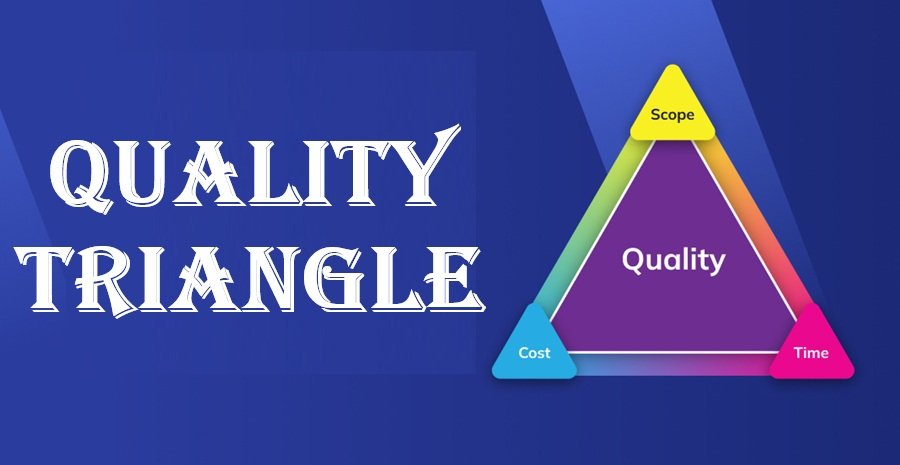
Introduction: Quality Triangle
The quality triangle, additionally known as the project management triangle or iron triangle, is one of the most essential principles in task control. Whether you’re a student, organization proprietor, freelancer, software application developer, or company supervisor, know-how the nice triangle is vital for handing over fulfillment tasks.
What is the Quality Triangle?
The Quality Triangle is a model that suggests the relationship amongst 3 primary constraints in any venture:
| Constraint | Meaning | Key Question |
|---|---|---|
| Scope | The total work required | What needs to be delivered? |
| Time | Project duration | When must it be completed? |
| Cost | Budget and resources | How much can we spend? |
The idea is easy:
You cannot alternate one constraint without affecting the others.
For instance:
- If you have a growth scope, you need extra time or a greater fee.
- If you reduce charge variety, you need to lessen scope or boom time.
- If you shorten the cut-off date, you want more charge or reduced scope.
The exception of the mission is primarily based upon how well these three constraints are balanced.
History and Origin of the Quality Triangle
The concept has ended up popular in conventional venture management methodologies, mainly thru frameworks promoted with the aid of businesses like:
- Project Management Institute (PMI)
- PRINCE2 methodology
- Traditional waterfall task control
Over time, the triangle is superior. Originally, Exquisite became considered the center of the triangle. Later, many professionals argued that exceptional isn’t separate—it’s far the end result of balancing scope, time, and charge.
The Three Components of the Quality Triangle
Scope (Project Requirements)
Scope refers to:
- Features
- Deliverables
- Tasks
- Functionalities
- Work requirements
It defines what the mission has to accomplish.
Example of Scope:
If you’re building an internet web page, scope may, moreover, embody the following:
- 10 internet pages
- E-alternate functionality
- Payment gateway integration
- Admin dashboard
- search engine advertising optimization
Scope Characteristics
| Scope Element | Description |
|---|---|
| Functional Requirements | What the system should do |
| Non-Functional Requirements | Performance, security, usability |
| Deliverables | Tangible outputs |
| Work Breakdown Structure (WBS) | Task breakdown |
Scope Creep
Scope creep takes area whilst greater requirements are brought without adjusting time or value.
Example:
The client adds “cell app integration” after the venture starts evolving—but the closing date and rate variety remain unchanged.
Result:
- Team stress
- Quality drop
- Budget overrun
- Deadline skip over
Proper scope management is essential for maintaining the iron triangle balance.
Time (Schedule Constraint)
Time refers to
- Project remaining date
- Milestones
- Task period
- Delivery schedule
Time Management Includes:
| Time Element | Explanation |
|---|---|
| Scheduling | Planning task timeline |
| Milestones | Key checkpoints |
| Critical Path | Longest task sequence |
| Dependencies | Task relationships |
Example:
If your internet website is online and needs to launch earlier than Diwali, its slow constraint is steady.
If the purchaser reduces the lesson-off date:
- You want extra developers (increase value)
- Or reduce talents (reduce scope)
Time compression strategies:
- Fast tracking
- Crashing (such as more belongings)
Cost (Budget Constraint)
Cost consists of:
- Labor cost
- Equipment
- Software licenses
- Materials
- Operational costs
Types of Project Costs
| Cost Type | Description |
|---|---|
| Fixed Cost | Does not change |
| Variable Cost | Depends on usage |
| Direct Cost | Directly linked to project |
| Indirect Cost | Overhead expenses |
Example:
If your undertaking finances are ₹10,00,000 and you need greater developers, price will increase.
If rate is consistent:
- Reduce scope
- Extend timeline
Relationship Between Scope, Time, and Cost
The triangle works due to the fact those 3 factors are interconnected.
Scenario 1: Increase Scope
If the scope will increase:
- Time should boom
- Or price need to grow.
- Or every
Scenario 2: Reduce Time
If the final date shortens:
- Need extra property (increase rate)
- Or lessen abilities (reduce scope)
Scenario 3: Reduce Budget
If charge variety decreases:
- Reduce scope
- Increase timeline
How Quality Fits into the Triangle
Quality is the outcome of balancing scope, time, and fee.
If you:
- Rush transport
- Cut-price variety
- Add capabilities without out making plans
Quality suffers.
Thus, the triangle does not immediately control awesome.
| Situation | Impact on Quality |
|---|---|
| Balanced constraints | High quality |
| Overloaded scope | Low quality |
| Unrealistic deadlines | Poor output |
| Underfunded project | Compromised standards |
Real-Life Examples of the Quality Triangle
Example 1: Construction Project
Building a residence:
- Scope: three floors, modular kitchen, garden
- Time: 365 days
- Cost: ₹50 lakh
If the owner goals it in 8 months:
- Hire greater humans (boom price)
- Or lessen layout complexity
Example 2: Software Development
App Development:
- Scope: Chat feature, login tool, fee gateway
- Time: 6 months
- Cost: ₹20 lakh
If the purchaser offers an AI chatbot:
- More time
- Or extra rate variety
Example 3: Event Management
Wedding planning:
- Scope: 1000 visitors, high-priced venue
- Time: three months
- Cost: ₹30 lakh
If fee variety reduces,
- Smaller venue
- Fewer decorations
Quality Triangle in Different Industries
| Industry | Application |
|---|---|
| IT | Software projects |
| Construction | Infrastructure |
| Marketing | Campaign planning |
| Healthcare | Hospital system implementation |
| Manufacturing | Product production |
Advantages of the Quality Triangle
- Simple concept
- Easy to recognize
- Helps in selection making
- Sets practical expectations
- Improves communication
- Risk management help
Limitations of the Quality Triangle
- Oversimplifies complicated responsibilities
- Ignores stakeholder pleasure
- Doesn’t include hazard explicitly
- Not bendy for agile environments
- Quality isn’t continuously primary
Modern Adaptations of the Quality Triangle
Modern task management has advanced.
In Agile methodologies:
- Scope is flexible
- Time and cost are often constant (sprints)
Some improved fashions encompass the following:
- Risk
- Resources
- Customer pleasure
- Value
Extended version instance:
| Traditional Triangle | Modern Version |
|---|---|
| Scope | Scope + Value |
| Time | Time + Speed |
| Cost | Budget + Resources |
| — | Risk |
| — | Quality Assurance |
Strategies to Balance the Quality Triangle
1. Clear Requirement Gathering
Define the scope actually before beginning.
2. Realistic Scheduling
Avoid aggressive closing dates.
3. Budget Planning
Include a contingency price range (10–20%).
4. Risk Management
Identify capability dangers early.
5. Change Control Process
Approve changes officially.
6. Stakeholder Communication
Regular updates save you misunderstandings.
Detailed Comparison Table: Fixed Constraint Scenarios
| Fixed Element | Adjustable Elements | Result |
|---|---|---|
| Scope fixed | Time + Cost | Flexible delivery |
| Time fixed | Scope + Cost | Feature reduction possible |
| Cost fixed | Scope + Time | Extended timeline |
| All fixed | None | High risk |
Quality Triangle vs Agile Model
| Aspect | Quality Triangle | Agile |
|---|---|---|
| Flexibility | Limited | High |
| Scope | Fixed | Flexible |
| Time | Flexible | Fixed (sprints) |
| Cost | Flexible | Often fixed |
| Customer Feedback | Limited | Continuous |
Practical Example: Website Project Breakdown
| Component | Initial Plan | Change Request | Impact |
|---|---|---|---|
| Pages | 10 | 20 | +Time or +Cost |
| Deadline | 4 months | 3 months | +Cost |
| Budget | ₹5 lakh | ₹4 lakh | – Scope |
Common Mistakes in Managing the Quality Triangle
- Ignoring scope creep
- Underestimating rate range
- Overpromising closing dates
- Poor communication
- No contingency making plans
- Lack of documentation
Role of Project Manager in Quality Triangle
A project supervisor has to:
- Balance constraints
- Negotiate alternate-offs
- Manage stakeholder expectancies
- Monitor development
- Ensure notable requirements
Key competencies required:
| Skill | Importance |
|---|---|
| Communication | High |
| Risk management | High |
| Budget planning | High |
| Leadership | High |
| Technical understanding | Medium to High |
Future of the Quality Triangle
With virtual transformation:
- Automation reduces charge strain
- AI improves scheduling
- Agile will increase flexibility
- Hybrid models integrate conventional and agile
The awesome triangle remains relevant; however, it keeps to comply.
Conclusion
The Quality Triangle is an effective framework that permits manipulating challenge constraints efficaciously. By the facts of the connection between scope, time, and rate, you can:
- Deliver better consequences
- Maintain excessive awesomeness.
- Reduce task dangers
- Improve stakeholder delight